
Game engines and their looks


(.FROST.) #1

The Infinity Ward engine(at least in COD MW) allways has this overall orange,yellow,olive tint. Even if something is actually blue it has this tendency too look like there is a color filter in front of the first person cam.

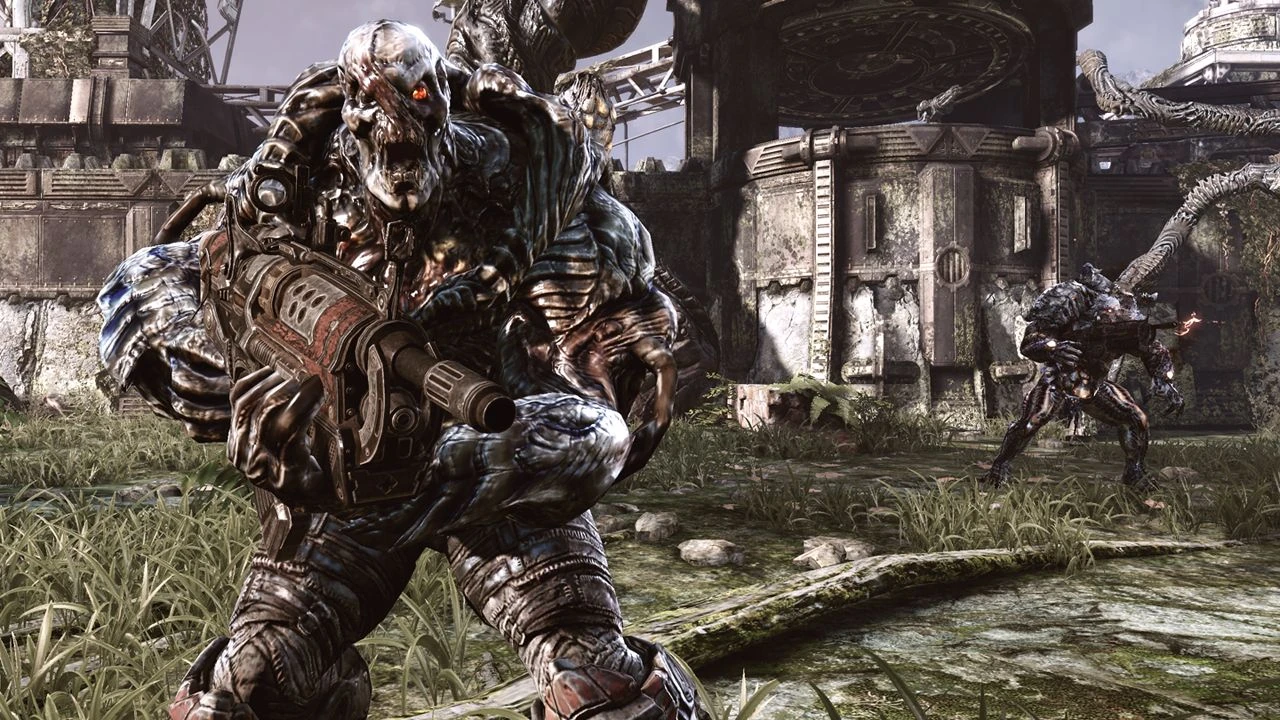
The Unreal Engine was for me allways an Engine that sports especially blue and purple-blue tints.

I know this isn’t contributing anything to the testing program of DB, but if someone has the same impressions, please let me know, cause I’m not sure if it’s only my own, highly subjective impression, or an actual fact.

PS: This orange/yellow/olive color palette of COD was also one(of many) reasons for me to not buy that game.

The UE’s tendency to have a purple/blue tint is ok for me, but I allways recognize this extreme bloom effect in UE games(wich I can turn off of course)

Nevertheless, maybe the whole color thing isn’t at all connected to a specific engine and I’m just stupid. Please feel free to enlighten me.


(mitsuhiko) #2

The only thing that the stock unreal engine does that affects visuals is the way the texture streaming system works (you see low resolution textures after map load until the high resolution stuff is mapped in). Everything else is not super specific to the engine. Dishonored and Mirror’s Edge are UE3 as well and it does not look anything like any other Unreal game you might find.


(Dthy) #3

Too add to what mitsuhiko said, Borderlands (and it’s sequel) and Gears of War are both made in the Unreal engine and they look completely different. It’s all down to the artists really.


(tokamak) #4

I would love to see some subtle green filter added to this game.


(Laurens) #5

Yes honestly this whole “recognisable looks of an engine” is something gamers have invented (and often like to argue endlessly about).

The color grading is set up specifically per level, yet we try to keep a consistent vision. That said, it could be subject to change, like anything in the alpha :slight_smile:


(tokamak) #6

Unreal, Gears of War and Bullet Storm are very much alike, Hawken and Tribes Ascend are also obviously made with the unreal engine.

Sure you can make completely different games with the engine if you like but that doesn’t take away from the fact that the further you want to deviate from the engine’s flagship the more work you need to put into it.

And then there’s always subtle artefacts that make engines recognisable. The Unreal Engine often has a bit of a delay in retexturing maps and weapons whenever you quickly change something. IdTech has very characteristic lightning, both engines also seem to have a completely different way of handling the bumpmaps.

And yeah again, the Unreal engine really seems big on the atmosphere filters.


(.FROST.) #7

It’s more subtle. It’s not like everything is purple, but especially shadowy areas have this distinctive purple tint. And I’m not talking about the visual style itself(Borderlands/GoW/Dirty Bomb), I’m talking about the colors. Dota2 and L4D are also quite different, but you can see, that both games are running on the same engine. The style is extremely different, but you can see where both are coming from(with L4D it’s not very hard to tell of course).

But look at some Unreal Screenies, the amount of purple may vary, but it’s allways there. They have allways an overall very “blueish” or purple tint to them, even if something is green, yellow, or red;

http://www.spieleradar.de/uploads/screenshots/C9/americas-army-3-pc-22v22_resized_1020_wm.jpg

http://mmohuts.com/wp-content/gallery/americas-army-overview/americas-army-sidewalk.jpg?ec9f9b

Gears of War;

Borderlands;

https://www.google.de/search?q=borderlands&oe=utf-8&aq=t&rls=org.mozilla:de:official&client=firefox-a&um=1&ie=UTF-8&hl=de&tbm=isch&source=og&sa=N&tab=wi&ei=jYevUIbFCMvO4QT69YHoBQ&biw=953&bih=478&sei=j4evUKvUEIaL4AS_g4GoDw#um=1&hl=de&client=firefox-a&tbo=d&rls=org.mozilla:de%3Aofficial&tbm=isch&sa=1&q=borderlands&oq=borderlands&gs_l=img.3...254243.256927.2.257134.11.11.0.0.0.0.318.2171.3-7.7.0...0.0...1c.1.jQNTuEWU62s&pbx=1&bav=on.2,or.r_gc.r_pw.r_qf.&fp=98e5967aa44bd42&bpcl=38897761&biw=953&bih=478


(.FROST.) #8

[QUOTE=tokamak;409241]Unreal, Gears of War and Bullet Storm are very much alike, Hawken and Tribes Ascend are also obviously made with the unreal engine.

Sure you can make completely different games with the engine if you like but that doesn’t take away from the fact that the further you want to deviate from the engine’s flagship the more work you need to put into it.

And then there’s always subtle artefacts that make engines recognisable. The Unreal Engine often has a bit of a delay in retexturing maps and weapons whenever you quickly change something. IdTech has very characteristic lightning, both engines also seem to have a completely different way of handling the bumpmaps.

And yeah again, the Unreal engine really seems big on the atmosphere filters.[/QUOTE]

Aaah Tokamak, can we please be friends:wink: I very much agree with everything you’ve said in the above. I didn’t found the exact right words for my post. Atmosphere-filters…that’s the word I was searching for:)


(mitsuhiko) #9

There is no “make stuff look blue” line in the source but there is color grading which is controlled by the artists. If you disagree feel free to drop constructive criticism :slight_smile:


(.FROST.) #10

If you say so I cant but take that as a fact. It is just that every unreal game has this tendency to have this blue shadows as well as this bright/white bloom effect. Again, I don’t know how engines work, but for the most part I can identify them even though the artstyle between games of the same engine may differ quite greatly.

Though there are exceptions of course. To my suprise, I wouldn’t/couldn’t identify Brink as a id-tech4 game just by the looks of it.


(rookie1) #11

I love the look of this game and its an hybride ETQW/Brink


(dazman76) #12

I used to think older generations of engines were recognisable, but not so much with the newer ones. I think rather than colour tints, I was just spotting either rendering techniques/mild artifacts, or just a choice of approaches that produced similar results. For example, id Tech 4 engine games mostly seemed to look over shiny/slimy to me - overuse of certain shaders maybe, so dry stuff looked wet, and wet stuff looked positively slimy. Quite a few of the older Unreal engine games either had (or chose to have) a very grainy effect on their textures - similar to what Valve did on L4D, but there it was definitely intentional and optional. Deus Ex, UT and Unreal all had this effect to an extent, and others I seem to have forgotten :slight_smile: I don’t like grainy textures at all, I have to admit - especially L4D, which was an “active” interference kind of thing to mimic low-quality film, whereas the UT games just seemed to grain their textures due to a filtering limitation maybe? My memory is admittedly slightly hazy when it comes to the older titles, so maybe the grain was in my mind :slight_smile: heh. Deus Ex is the one that really sticks out there.

I like how DB looks at the moment - it’s nice and clean, I’m liking the art style, and I see elements of both Brink and ET:QW in the details - more Brink for sure. I was a fan of the Brink art style, so that’s a good thing for me :slight_smile: I must admit I haven’t really noticed this blue tint, but that’s not to say it isn’t there!


(.FROST.) #13

[QUOTE=.FROST.;409467]If you say so I cant but take that as a fact. It is just that every unreal game has this tendency to have this blue shadows as well as this bright/white bloom effect. Again, I don’t know how engines work, but for the most part I can identify them even though the artstyle between games of the same engine may differ quite greatly.

Though there are exceptions of course. To my suprise, I wouldn’t/couldn’t identify Brink as a id-tech4 game just by the looks of it.[/QUOTE]

It may be absolute pointless to revive this necro thread, but it’s very hard for me to shut my mouth when I think I have to say/add something to something(may it be useless or not). And in no way is that meant to be any kind of criticism; it’s just an observation I made. The U-engine has this distinctive blue and purple tint; Yeah, I know, it’s night on that specific map and shadows may be blue sometimes , but just look at the lower part of the brickwall in pic 04763, or the cardboard boxes on image 04764.
That is distinct to unreal games. At least I first have to see an unreal game wich I can’t reckognize as such, by those specific blue shadows.


(Bloodbite) #14

It’s probably a neuro connection you’ve made about something else.

Each engine seems to have a unique closer-to-default style of movement and responsiveness. I daresay you played something blue looking when you made that hand-eye link for the Unreal engine.

I think Unreal 3 has been the engine that has suffered the most from subpar developer implementation of input response and accuracy.

I can think of more games under idTech 3 that I felt comfortable moving inside of than any other engine… but there were certainly a few that stood out as too-much-like-q3 just without the refinement.

Let’s face it, UT3 was a let down in movement compared to UT2K4 and especially '99. First impressions stick alittle too hard with game engines it seems.


(mitsuhiko) #15

Well, the responsiveness is inferior in modern games compared to older titles. That unfortunately is something that will probably not change back anytime soon. Not all is lost, we could win some latency back by improving the latency outside of the game (between input device and computer and computer and monitor) :slight_smile:


(Bloodbite) #16

I dunno. I think its an issue with game industry coders. The further in time we drift away from that era when everyone knew DOS, the sloppier their coding efforts are… as a mass generalisation.

Killing Floor I thought was very responsive. From memory Bulletstorm was good too, despite the fact that there was no jump… so Unreal can be tweaked to perform nicely with a mouse.

Too many twiddlestick jockeys.


(.FROST.) #17

[QUOTE=Bloodbite;417746]It’s probably a neuro connection you’ve made about something else.

Each engine seems to have a unique closer-to-default style of movement and responsiveness. I daresay you played something blue looking when you made that hand-eye link for the Unreal engine.[/QUOTE]

Uhm, what? I’ve never said anything in the direction of hand-eye link. Actually, I don’t understand what you mean with that. I’ve said; the colors blue and purple are very dominant in unreal games; especially in shadow areas. And by all means, that is quite obvious from those nice pics I’ve posted in the above. Don’t get what you mean with that hand-eye and neuro connection nonsense.

If you were talking about how a game’s responsiveness is tied to a certain engine, then I get it, but I never dabbled in that sub-topic myself, just because I never payed attention to that. Therefore I don’t understand why you were (false)“quoting” me indirectly.

PS: I’d recommend, that you take a look at the links/pics in one of my older posts and you may find some visual similarities to my latest DB screenshots.


(mitsuhiko) #18

I don’t know about the quality of the code, what I do know about is that a modern engine has a much more complex pipeline than what you had 10 years ago. Today your engine is hugely parallelized and very modular. Latencies are created in many parts of the system and in quite a few cases there is not a lot of choice you have to remedy that.

No laziness, no conspiracy, just complexity. I am pretty sure 20 years ago some people thought the same thing about adding unnecessary complexity by introducing newfangled things like “virtual memory mapping”. Who would ever need such a thing, it’s pure overhead! :slight_smile:

//EDIT: Also quite a few guys in the office are obsessed with good input so you can be sure we will work hard on having as little latency as possible in the game.


(Bloodbite) #19

Oh I know Splash will work towards getting it right… but you know there are other developers out there that are very half arsed. Too many in my opinion.


(Bloodbite) #20

It translates into “It’s all in your head son!”