
Or to put it another way, we are running DB as a game as a service, we will keep building it and changing it after ‘release’ to make it better. That means with all elements we add we never consider them done and always think of how we can evolve them.
Crafting a perfect Loot Crate system...
Glottis-3D
(Glottis-3D)
#22
ehm, that was a joke…some kind of hyberbolization. damn im getting old, and so does my humour. =)
tokamak
(tokamak)
#23
Right now it reminds me of a baseball card system. Which isn’t inherently bad, baseball cards are highly successful profitable enterprises.
- The collector:
But it’s going to appeal to a certain sub-group in your audience. Collector’s want cards. Just like in TF2, they want completion, and they’ll pay big money to get the whole thing complete. They want the redudant and the useful. They want clear catalogues and progress bars on their collection and they want indeed the gamble of working for the ‘chance’ of finding something rare that can only be obtained through either finding or trading. Directly buying is a sin and you would make the collector very unhappy with that option.
But there are more archetypes in the F2P audience. This is just from observation, it hasn’t actually be studied so throughly:
- The shaper.
Shapers want to work on one thing and see it grow. Skyrim or Civ 5 are great examples. You got a very tall and narrow tech tree. Prioritisation is the most important skill to have. You define yourself by what perks you pick first and which ones you safe for later. They accept that it’s possible for everyone to have everything but the sheer amount of time and money that would require means that only a small part of the playerbase will ever have that extravagance.
- The Tinkerer
Tinkerers like a modular system based in a sandbox. Everything can be combined and there’s lots of synergy between the choices they make. Because everything is combined this creates an infinite amount of possibilities which may either be horrible or fantastic or anywhere in between. This enormous range of possibilities favours those that experiment and find new ways of playing before the rest. Tinkerers love trial and error and are willing to pay for extra amount of trials.
I guess Minecraft is the best example but only in the construction aspect. In the crafting aspect it’s quite linear.
- The Grower.
The Grower resembles the Shaper but prefers more path dependancy. They want a set of numbers they can constantly improve further. This is what WoT does. You pick one tech tree at the start and you’ll stick to it for months. There’s very little branching or cross-overs. The grower is fine with not ever having everything. In WoT it’s virtually impossible to obtain all the tanks due to the strictly separate tech trees. For a casual gamer it’s not even likely to fully complete a tank with all it’s augmentations because the progress tapers off at the end.
Classic WoW also used to be like this. It took ages to get to level 60 and at the start you wouldn’t have any idea what your class would be like at the end. Blizzard streamlined this heavily and players can quickly grow their favourite class now but the original had a certain thrill to walking a certain path without any practical way out.
So yeah. Those are the type of F2P players I can identify. These archetypes can be divided over a ‘wide’ or ‘tall’ organisational structure.
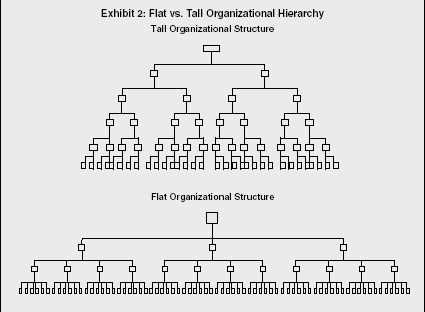
‘Wide’ is for the collector and ‘Tall’ is for the ‘grower’. The shaper also prefers ‘tall’ but wants more flexibility within the tiers.
Personally I think a game is more addictive if a player gets to focus on one character and build affinity with it rather than gathering a whole range of things for the sake of having them. After all, it’s kind of inherent to a FPS that you only get to play one character at the time.